
A Neighborhood with a Story to Tell
Cherrywood Village is easy to appreciate at first glance: mature trees, comfortable homes, quiet residential streets, and the convenient rhythm of everyday life in south metro Denver. But like many Centennial neighborhoods, its history reaches back farther than the city itself.
Today, Cherrywood Village is recognized as one of Centennial’s established neighborhoods, located south of Dry Creek Road and east of South University Boulevard. The City of Centennial’s neighborhood maps identify Cherrywood Village as a distinct residential community, while local housing references commonly associate it with streets such as South High Street, South Gaylord Way, South Wellington Street, South Kit Carson Drive, and East Mineral Avenue. ([maps.centennialco.gov](https://maps.centennialco.gov/arcgis/rest/services/HOAs_Civic_Associations_and_Neighborhoods/MapServer/legend?utm_source=openai))
What makes Cherrywood Village special is not one grand historic building or a single founding event. Its heritage is found in the gradual transformation of open Arapahoe County land into a close-knit suburban neighborhood—and in the way residents have continued to care for the community over the decades.
Before Cherrywood Village
Long before Cherrywood Village appeared on a subdivision map, the surrounding area was part of the broad agricultural landscape south of Denver. The region was shaped by open prairie, seasonal drainageways, ranches, farms, and the transportation routes that gradually connected rural settlements with the growing metropolitan area.
Dry Creek, just north of the neighborhood, remains an important geographic reference point. In earlier generations, waterways such as Dry Creek helped define movement across the prairie and influenced where roads, farms, and later development took shape. The larger area was still considered unincorporated Arapahoe County for much of its modern development history.
The suburban growth that eventually produced Cherrywood Village accelerated after World War II. As Denver expanded southward, families were drawn to larger lots, newer schools, improved roads, and the promise of a quieter setting outside the older urban core. Communities such as Southglenn, Cherry Knolls, and Cherrywood Village emerged during this broader wave of residential development.
How Cherrywood Village Got Its Name
The name “Cherrywood Village” appears to be associated primarily with the neighborhood’s original subdivision and platting rather than with a formally documented historic village or a single landmark. Publicly available city records and neighborhood references identify Cherrywood Village as a named residential area, but they do not provide a definitive account of one person, orchard, or event responsible for the name. ([maps.centennialco.gov](https://maps.centennialco.gov/arcgis/rest/services/Energov/Energov_v1/MapServer/legend?utm_source=openai))
That uncertainty is part of the neighborhood’s character. In south metro Denver, “Cherry” names are common reminders of the region’s long association with Cherry Creek, Cherry Hills, Cherry Knolls, and other communities that developed along the Front Range’s historic waterways and agricultural corridors. “Wood” may simply have conveyed a sense of greenery, shade, and a more settled residential landscape—an appealing promise for buyers looking for a welcoming place to put down roots.
Whatever the original marketing intention, the name has aged well. Mature landscaping and established streets give Cherrywood Village a pleasantly wooded, lived-in feeling compared with newer subdivisions farther east and south.
Building the Neighborhood
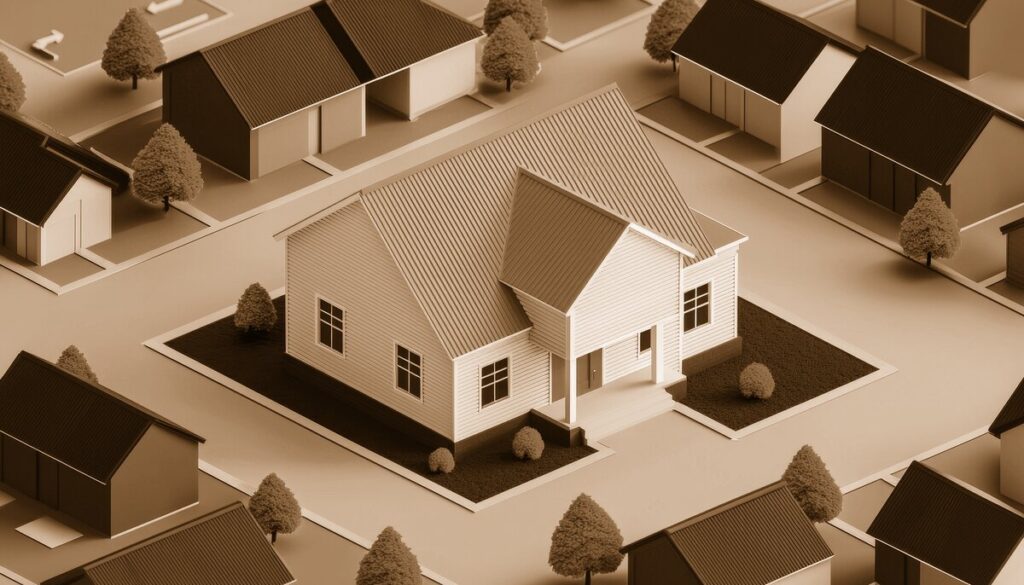
Cherrywood Village took shape during the era when suburban builders favored practical ranch-style homes, split-level designs, and modest two-story houses. Many of the neighborhood’s homes reflect the architectural preferences of the late twentieth century: attached garages, front-facing driveways, brick or siding exteriors, efficient floor plans, and yards designed for family life.
The neighborhood’s streets tell part of that story. South High Street and South Gaylord Way provide recognizable north-south routes, while South Wellington Street, South Kit Carson Drive, and East Mineral Avenue connect the neighborhood to nearby communities and commercial areas. Real-estate and property records continue to identify individual homes in Cherrywood Village by their subdivision filings, including Cherrywood Village 2nd Filing, evidence of the incremental way the community expanded. ([compass.com](https://www.compass.com/homedetails/7855-S-Gaylord-Way-Centennial-CO-80122/776857439352802337_lid/?utm_source=openai))
Rather than being built all at once, the neighborhood developed in stages. Each phase added homes while preserving the basic suburban pattern: residential streets, landscaped front yards, sidewalks, and convenient access to schools, shopping, and major roads.
Centennial Arrives
One of Cherrywood Village’s most important milestones came not within the subdivision itself, but at the civic level. Centennial became a city on February 7, 2001, incorporating portions of unincorporated Arapahoe County, including communities that had long functioned as established suburban neighborhoods. ([en.wikipedia.org](https://en.wikipedia.org/wiki/Centennial%2C_Colorado?utm_source=openai))
For residents, the change helped give a clearer municipal identity to a collection of neighborhoods that had previously relied heavily on county services and regional institutions. Cherrywood Village became part of a city known for its network of residential communities, strong schools, parks, trails, and carefully planned growth.
The neighborhood’s location also became increasingly valuable. It sits near South Suburban Parks and Recreation facilities, the South Suburban Golf Course area, the Streets at SouthGlenn, and the Dry Creek corridor. Dry Creek Station and nearby transit connections provide additional access to the Denver Tech Center and the wider metropolitan region. These amenities have helped Cherrywood Village remain attractive across generations. ([apartments.com](https://www.apartments.com/cherrywood-village-centennial-co/student-housing/?utm_source=openai))
Everyday Landmarks and Nearby Institutions
Cherrywood Village does not have a traditional downtown or a courthouse square. Its landmarks are the familiar places that shape daily routines.
- Dry Creek Road serves as a major northern reference point and links the neighborhood to regional roads, trails, and transit.
- South University Boulevard provides a direct connection to shopping, schools, and employment centers.
- The Streets at SouthGlenn functions as a nearby gathering place for dining, retail, community events, and errands.
- South Suburban Parks and Recreation facilities offer access to recreation, sports, open space, and golf.
- Cherry Creek School District schools serve the broader area and have long been an important part of the neighborhood’s appeal. Centennial residents are served by both the Cherry Creek and Littleton school systems, depending on location. ([centennialco.gov](https://www.centennialco.gov/Residents/Neighborhoods?utm_source=openai))
In a neighborhood like Cherrywood Village, a landmark may be as simple as a familiar corner, a well-kept greenbelt, or the route children have walked to school for years. These ordinary places become meaningful through repetition and memory.
How Cherrywood Village Has Evolved
Over the decades, Cherrywood Village has changed without losing its original suburban identity. The first generation of homeowners has gradually given way to new residents, including young families, professionals, downsizers, and people seeking a central Centennial location. Homes have been remodeled, kitchens opened up, landscaping refreshed, and older properties updated for contemporary living.
At the same time, the neighborhood has retained qualities that newer developments often work hard to recreate: established trees, varied home styles, recognizable streets, and a sense of continuity. Its location has become more connected, but it has not become anonymous.
That balance is perhaps Cherrywood Village’s greatest heritage. It is a neighborhood shaped by growth, yet grounded in familiarity. The houses may be updated and the surrounding city more developed, but the basic appeal remains much the same as it was when families first arrived: a comfortable home, a peaceful street, and convenient access to the best of south metro Denver.
For longtime residents, Cherrywood Village is more than a subdivision name on a map. It is the collection of small memories—winter walks on High Street, summer evenings near Mineral Avenue, errands along University Boulevard, and the changing colors of mature trees—that turn a residential development into a true neighborhood.